Otter
Cliff, in Acadia National Park, Maine,
is one of the most spectacular sights along the North Atlantic Seaboard. On the east side of the Park
Loop Road, about .7 miles past Thunder
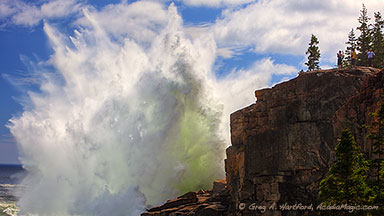
Hole, is the famous 110 foot high Otter Cliff - one of the highest Atlantic coastal headlands north
of Rio de Janeiro. Just before Otter Cliff is a beautiful spot called Monument
Cove. Right after this, the road begins to curve to the left. To the right is a small parking area
with portable rest facilities. On the other side of the street is a path that leads to the cliff. (see Otter
Cliff photos)
One
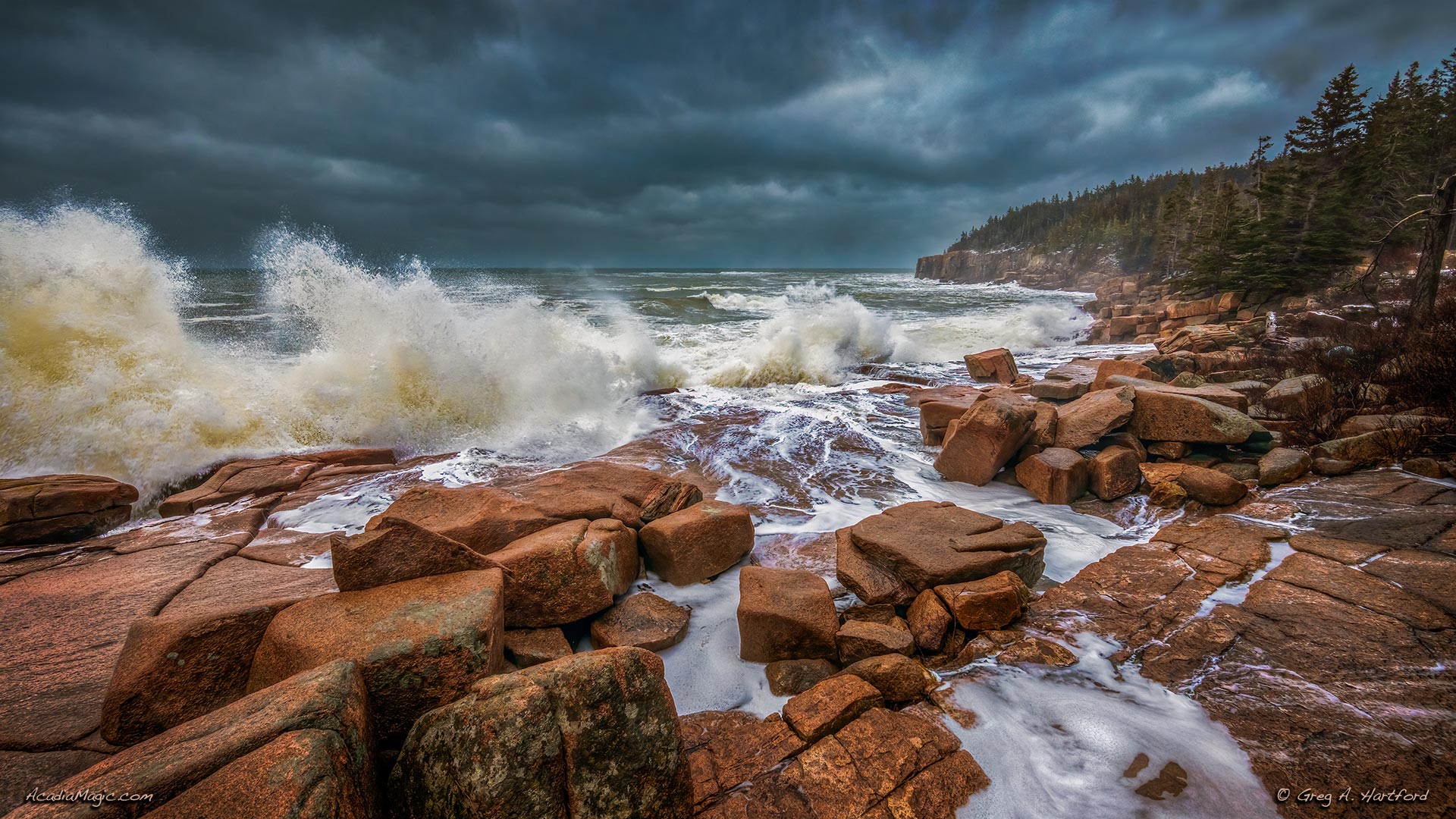
of the most noticeable features in most photos of Otter Cliff, along with the headland itself, are the thousands
of rounded boulders in the foreground that are in the small cove immediately to the north. Over countless centuries,
the rocks have been pounded by the sea and eroded by both water and against each other after being deposited
by huge glaciers that once moved across the land here on the island. When the light is low on the horizon,
the warm sunlit sides on the left contrast with the cool shadow sides on the right and these rounded shapes
contrast further with the rugged and weathered vertical granite cliffs set ablaze by the rising sun. The viewing
of this can quicken the heart and and mind, creating lasting impressions of millennium condensed into one's
own life.
A
bell buoy located just off the shore from Otter Cliff has special historical significance. It marks a rock
formation called the "Spindle."
Centuries ago in September of 1604, while sailing around Mount Desert Island at
high tide, the explorer Samuel Champlain was drawn closer when he noticed smoke rising from a Native
American encampment near Otter Point. After striking the "Spindle,"
his ship was forced into Otter Cove for safety and repairs through the
winter.
The Ocean
Path that begins back at Sand
Beach and passes by Thunder Hole, arrives at Otter Cliff. Along the way are many wonderful vantage
points from which you may partake in this visual feast in all its splendor and it is highly recommended.
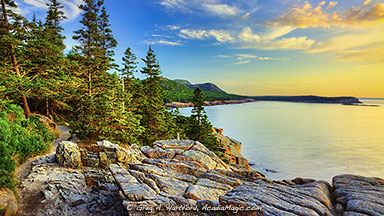
Since this is on the east coast of Mount Desert Island, this whole section of Acadia National Park is perfect
for watching a sunrise.
Use utmost caution when near the cliffs. The rocks may be slippery and little bits of sand and rock particles
can act like marbles causing you to slip and fall. Severe injuries can result.
Note: Just prior to arriving at Otter Cliff, you may notice a road on the
right called Otter Cliff Road. If needed, this will take you to Route 3 where you can take a right to return
to Bar Harbor or take a left to go to Otter Creek
and Seal Harbor.
Acadia National Park Hiking Trails
Otter Cliff Parking Area GPS: Latitude 44.310803; Longitude -68.189828
Hulls Cove Visitor Center GPS: Latitude 44.409286; Longitude -68.247501
If you love Acadia National Park and how AcadiaMagic.com presents it, please let others
know!
|